She was called the golden falcon and the son of a god.
Why “son”? After all, Hatshepsut was a woman…
That’s what this story is about
Hatshepsut was born into the royal family; her father was the great pharaoh Thutmose I, and her mother was Queen Ahmose
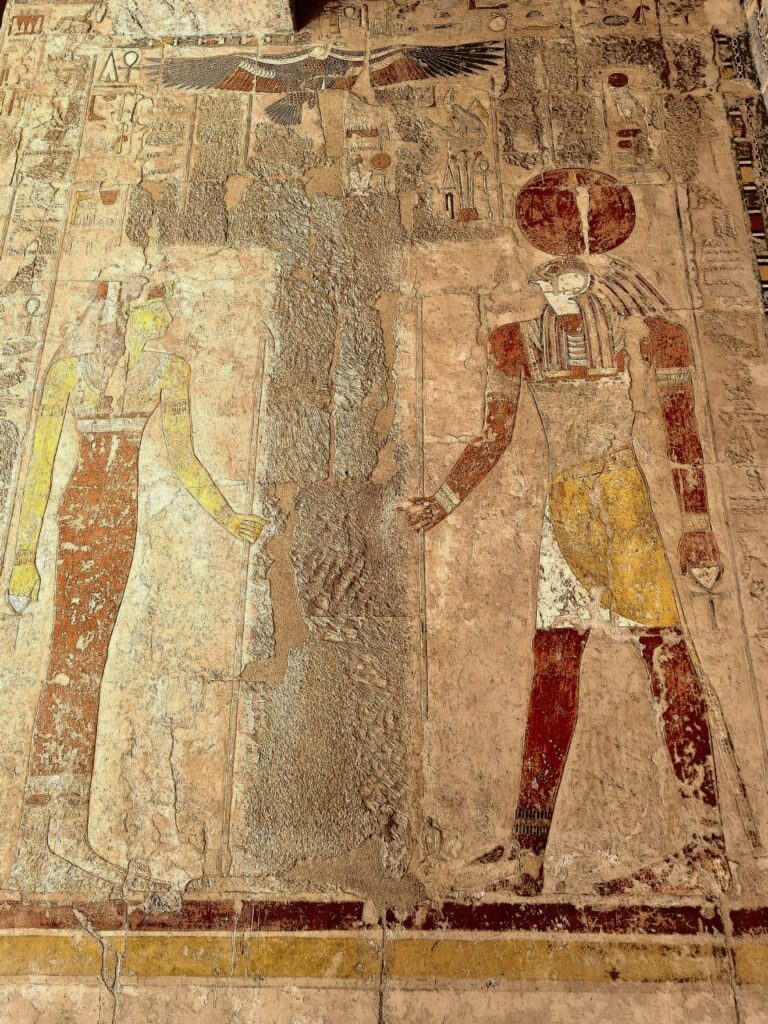
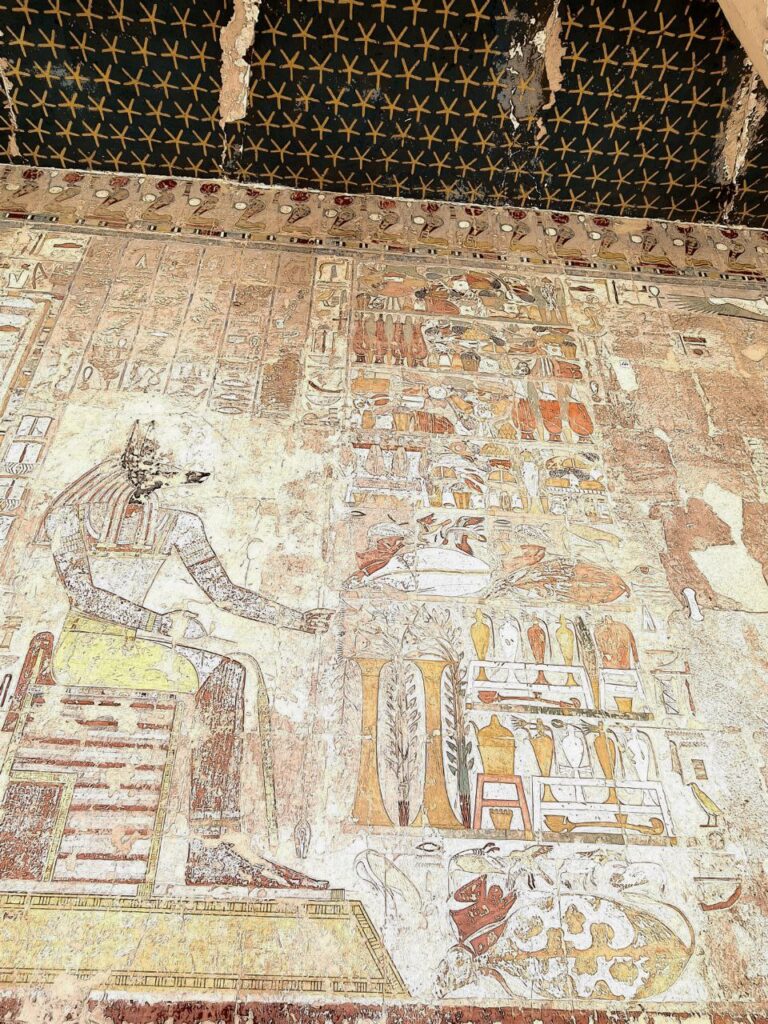
Hatshepsut received the title of divine child at birth, or rather even at the moment of conception. On the walls of the Temple of Hatshepsut a scene is depicted in which, on the night of conception, Queen Ahmose is visited by her husband in the form of the god Amun-Ra.
How did queens understand the appearance of the spirit of a god? By the scent of frankincense and myrrh
That night Ahmose understood that a divine child had been conceived within her
The name Hatshepsut translates as “Foremost of Noble Ladies”
She was the daughter of a king, the Great Royal Wife, and held the title of God’s Wife. That is, she held the highest priestly title in the clergy of the god Amun at Karnak. This was the highest rank a woman could achieve in Egypt.
Hatshepsut managed to become the head of a powerful state and rule it for more than 20 years. She was not the only woman pharaoh, but among all of them she was the most successful.
The most striking fact is that the queen was crowned as a legitimate pharaoh, ignoring a centuries-old tradition of succession to the throne. Inheritance passed through the female line, but the pharaohs themselves were men. So it was the son-in-law - the husband of the princess, the daughter of the chief royal wife (who was necessarily a carrier of royal blood) - who became king.
That is precisely why the sons of pharaohs were forced to marry their own sisters in order to inherit the throne. Any attempt to go against the traditional concept of royal power could end tragically, even for a politically skillful woman like Hatshepsut.
Her father, Thutmose I, was known for his great military prowess; his campaigns into Asia and Nubia showed his drive to expand Egypt’s borders.
From his first marriage his daughter Hatshepsut was born, and from a concubine, the heir Thutmose II was born
According to established tradition, in order to legitimize Thutmose II’s power, his marriage to his sister Hatshepsut was necessary
Once the marriage took place, Thutmose II gained the right to the throne.
And here the mother’s story repeats itself. Hatshepsut gives birth to a daughter, while the concubine gives birth to a son, Thutmose III.
It should be noted that Thutmose II was in poor health and so died young.
And Hatshepsut becomes regent for the young ruler Thutmose III
At first she rules in the name of her stepson, but soon reliefs begin to appear showing Hatshepsut carrying out the functions of a king - presenting offerings to the gods, commissioning obelisks of red granite. And a few years later she officially becomes pharaoh and rules for 21 years
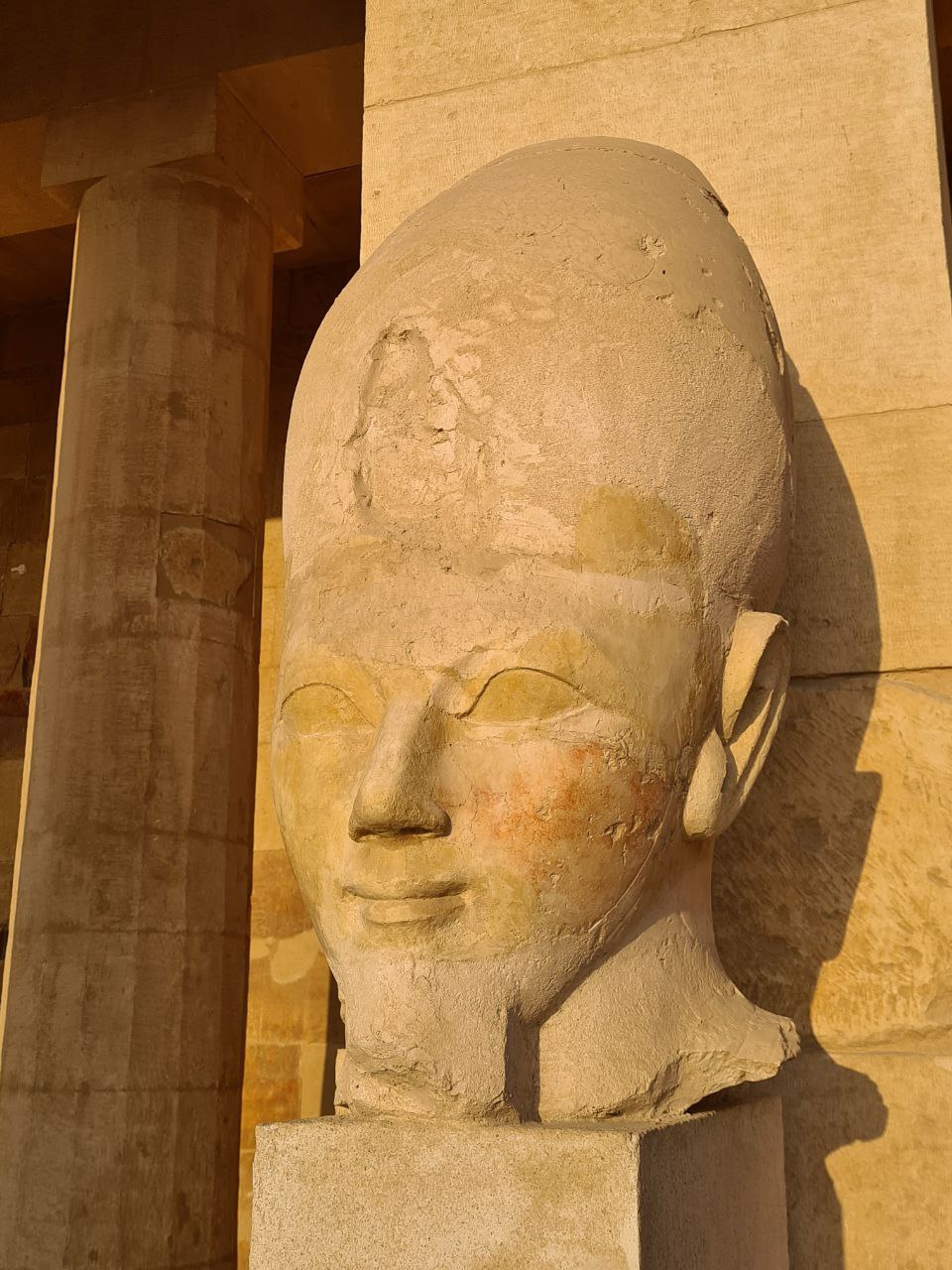
The queen was depicted with a beard. Why did Hatshepsut need a beard?
The ancient Egyptians believed that a man’s life force, Ka, was fundamentally different from a woman’s life force, Hemsut, and that only a man could serve as a mediator between god and human, in order to bring this divine force down to the physical level.
This was precisely the main gender problem faced by all female rulers of ancient Egypt.
During Hatshepsut’s reign, the country flourished.
The queen equipped numerous military expeditions. She rallied around her the capital’s elite, the provincial nobility, the army, and even the ever-scheming priesthood.
The Temple of Hatshepsut was built in the 15th century BC at Deir el-Bahari; in ancient times the place was called Djeser-Djeseru, meaning “Holy of Holies”
It is a unique architectural monument. Instead of the usual massive pylons, there are three open terraces rising one above another along the mountain slope. Excavations have shown that the idea did not originally belong to Hatshepsut. To the left of this temple, the remains of the mortuary temple of Pharaoh Mentuhotep II (21st century BC) were discovered, which had roughly the same architecture.
Deir el-Bahari is also famous for the fact that in a rock-cut tomb from the Middle Kingdom period, a secret cache of 40 royal mummies was discovered in the 19th century, hidden there by the priests of the 21st dynasty. This was a period marking the beginning of the decline of the ancient Egyptian civilization, when the tombs of the pharaohs in the Valley of the Kings were being plundered. That is why the priests took care to preserve the remains of the pharaohs.
And about 10 years later, another cache was discovered, containing 153 mummies of priests - apparently the very ones who had hidden the royal mummies.
The queen died at the age of 50. After her death, her name was struck from all the lists of the kings of Egypt, and erased from all monuments. It was only in the 19th century that the French orientalist Jean-François Champollion, attempting to translate the royal name on a statue from the inner chambers of the temple complex, realized that the name was feminine.
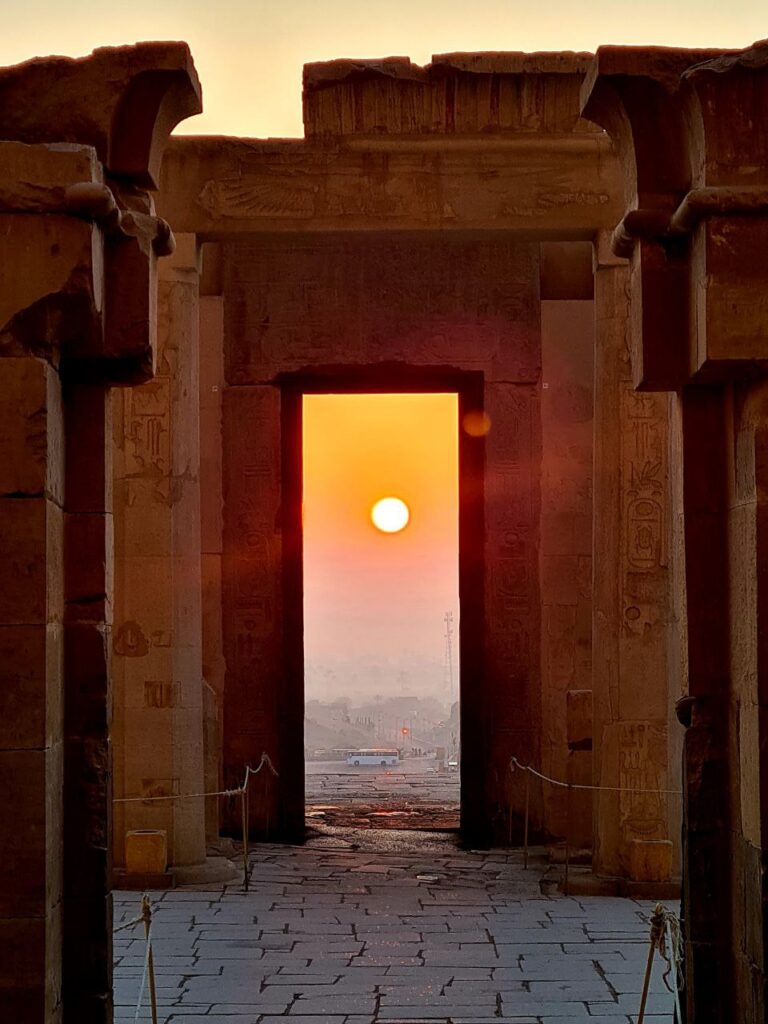
In winter, you can catch an incredibly beautiful sunrise at the foot of the temple